
Wilkes County Criminal Court Records
A criminal court record is the court case file, not just the arrest event. In Wilkes County, the Clerk of Superior Court's Judicial Division stores and retrieves criminal records, prepares criminal arraignment, pretrial, and trial calendars, records sentences, prepares final dispositions, and transmits those final dispositions to GCIC. The full criminal file may include the charging paper, arraignment entry, bond order, motions, hearing notices, trial verdict, plea paperwork, disposition, sentence, probation terms, financial obligations, and appeal documents.
Georgia Superior Court is the general-jurisdiction court for felonies and other serious criminal matters. The Toombs Judicial Circuit District Attorney prosecutes felony violations of state law in Wilkes County and also misdemeanors not resolved in probate or city courts. Magistrate Court may handle first appearances and warrant-related preliminary matters. Probate Court handles county traffic, and Washington Municipal Court handles city-limit traffic and ordinance cases. Criminal court records should be traced to the court where the case was filed.
The Toombs Judicial Circuit District Attorney homepage is the local prosecution source for Wilkes County criminal court records context.
The prosecutor source helps explain why a filed criminal case may differ from the original arrest or booking information.
Search Wilkes County Criminal Court Records
Wilkes County did not have a public countywide online case portal located in the official research. Start with the Clerk of Superior Court for filed Superior Court criminal records. PeachCourt and Georgia Courts e-access may help with provider-based access where available, but accounts and court participation control what can be seen. If the case has not yet been filed or is still at a warrant or first-appearance stage, Magistrate Court or the Sheriff's Office may have the nearer record.
The Toombs Circuit DA office page describes the counties served and the prosecution duties that feed criminal case filings in Wilkes County.
Those duties connect arrest, prosecutor charging decisions, court filings, pleas, dispositions, appeals, and child-support enforcement when relevant.
- Confirm whether the matter is a Superior Court criminal case, lower-court matter, county traffic case, or city municipal case.
- Contact the Clerk of Superior Court for filed felony and Superior Court criminal records using the defendant name, case number if known, and approximate filing year.
- Use PeachCourt or Georgia Courts e-access only when the system supports the case type and access level needed.
- Ask the clerk whether the file has docket entries, filed charging papers, disposition forms, sentence records, or appeal documents.
- Request certified copies directly from the custodian if the record must be used for court, licensing, immigration, or official proof.
Wilkes Criminal Case Flow
Criminal court records change as the case moves through each stage. A charge may begin with a warrant, arrest, complaint, accusation, or indictment. Once filed in court, the docket can add arraignment, motions, continuances, hearing notices, plea negotiations, trial settings, verdicts, dispositions, sentence entries, and appeals. Some cases end by dismissal or nolle prosequi, which means the prosecutor does not pursue the charge. Others end by plea, trial verdict, sentence, probation, or transfer.
Case flow: Charges Filed › Arraignment › Pretrial / Motions › Plea or Trial › Disposition › Sentencing
| Stage | What Happens |
|---|---|
| Charges filed | A prosecutor or grand jury filing starts or shapes the criminal court case. |
| Arraignment | The defendant is advised of the charge and enters a plea. |
| Pretrial / motions | Parties file motions, subpoena witnesses, address evidence, and prepare for plea or trial. |
| Plea or trial | The case resolves by plea agreement, bench trial, jury trial, acquittal, dismissal, or other court action. |
| Disposition | The court records the case or charge outcome, such as guilty, not guilty, dismissed, nolle prosequi, or transferred. |
| Sentencing | The court records jail, prison, probation, fines, costs, restitution, or other punishment after conviction or plea. |
What Wilkes Criminal Records Show
A Wilkes County criminal court record may show both the accusation and the outcome. Read the file in sequence. A docket entry for an indictment or accusation is not proof of guilt. The key fields are the filed charge, hearing history, plea, disposition, and sentence. The clerk's duties also include publishing verdicts, maintaining evidence, preparing prisoner packages to GDC, and transmitting criminal final dispositions to GCIC.
| Field | What It Shows |
|---|---|
| Case number | The court identifier assigned to the criminal case, if known or available. |
| Defendant | The person charged in the criminal case. |
| Charge | The accusation, indictment, or other filed offense listed by the court. |
| Arraignment and plea | The plea entered, such as guilty, not guilty, or nolo contendere. |
| Motions and hearings | Pretrial filings, subpoenas, continuances, evidence issues, and trial notices. |
| Disposition | The result of each charge, including guilty, not guilty, dismissed, nolle prosequi, transferred, appealed, sealed, or restricted. |
| Sentence | Jail, prison, probation, fines, costs, restitution, or other court-ordered terms if conviction occurs. |
| Appeal documents | Records prepared and transmitted to the Georgia Court of Appeals or Supreme Court of Georgia when applicable. |
Wilkes Charges vs Convictions
Charges and convictions must be read separately. A charge is an allegation filed into the criminal court record. A conviction is an outcome after a guilty plea, guilty verdict, or other conviction result. Wilkes County criminal court records can also show dropped, reduced, amended, dismissed, or nolle prosequi charges. For the charging path itself, see Wilkes County arrest records and court charges.
| Charge | Conviction | |
|---|---|---|
| Meaning | An allegation filed by accusation, indictment, complaint, or related court paper. | A court outcome after plea or verdict. |
| Where it appears | Charging document, arraignment entry, docket, and hearing notices. | Disposition, sentencing entry, final disposition, and GCIC reporting. |
| Can change | Yes, it may be amended, reduced, dismissed, or not pursued. | It can be appealed, corrected, restricted, or affected by later court orders. |
| How to verify | Read the full docket and filed charging paper. | Read the final disposition and sentence, then confirm certified copies with the clerk. |
Read Wilkes Criminal Dispositions
Disposition means the current or final outcome of a case or charge. In a Wilkes County criminal court record, disposition values may include pending, guilty, not guilty, dismissed, nolle prosequi, plea, transferred, appealed, sealed, or restricted. A sentence is different from a disposition. The sentence is the punishment ordered after conviction or plea, such as probation, jail, prison, fines, costs, restitution, or other court terms.
The Toombs Circuit DA contact page lists Wilkes courthouse contact and directions for prosecution-related context.
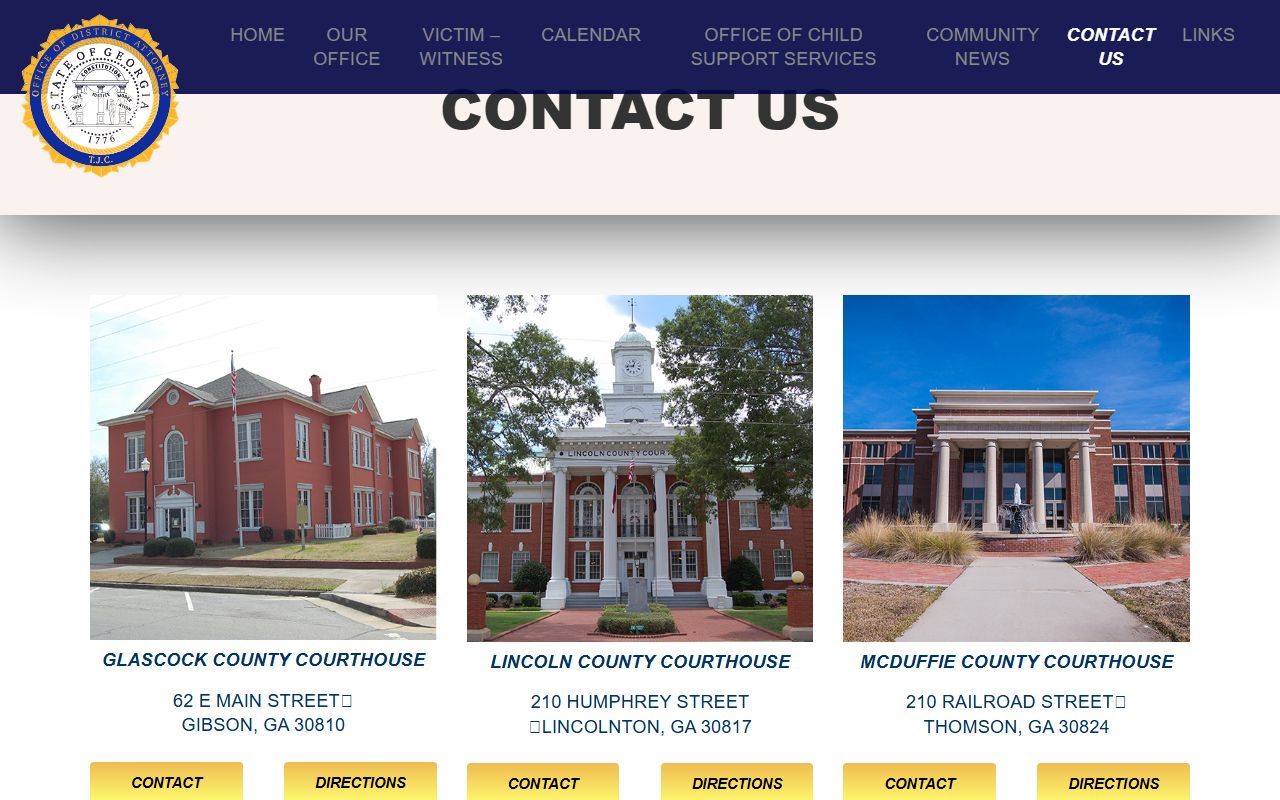
Use the DA contact source for prosecution routing, not for certified copies of court records held by the clerk.
- Arraignment
- Court event where charges are read and a plea is entered.
- Nolle prosequi
- A prosecutor's decision not to pursue a charge.
- Disposition
- The outcome or current status of a case or charge.
- Sentence
- The punishment ordered after conviction or plea.
Sealed vs Restricted Records
Georgia often uses the term record restriction for limiting public access to qualifying criminal-history information. Sealing can also remove parts of a court file from public inspection by court order or law. These limits do not erase every government copy, and they do not always block criminal-justice agency access. The result depends on the record type, offense, date, prosecutor action, and court order.
| Sealed | Restricted | |
|---|---|---|
| Public view | Removed from ordinary public inspection by law or court order. | Limited for non-criminal-justice purposes when eligible and approved. |
| Georgia source | Court rules, statutes, or case-specific court orders. | O.C.G.A. 35-3-37 and GBI record-restriction guidance. |
| Who may still see it | Named parties, courts, law enforcement, or authorized agencies may retain access depending on the order. | Criminal-justice users may still access restricted history under the law. |
| Wilkes route | Ask the court that sealed the file or the Clerk of Superior Court for process limits. | For many post-July 1, 2013 arrests, contact the prosecutor rather than the arresting agency. |
Public Access to Wilkes Criminal Records
Public access starts with the custodian. Superior Court criminal files route to the Clerk of Superior Court in Room 301. Magistrate first-appearance or warrant-related matters route to Room 427. Sheriff's arrest, booking, jail, incident, or warrant records route to the Sheriff's Office at 225 Andrew Drive. Georgia public-record law supports access to public agency records through O.C.G.A. 50-18-70 and inspection or copying under O.C.G.A. 50-18-71, but sealed and confidential court records remain limited.
The GBI criminal-history restriction page explains the Georgia process for review, correction, restriction, and sealing.
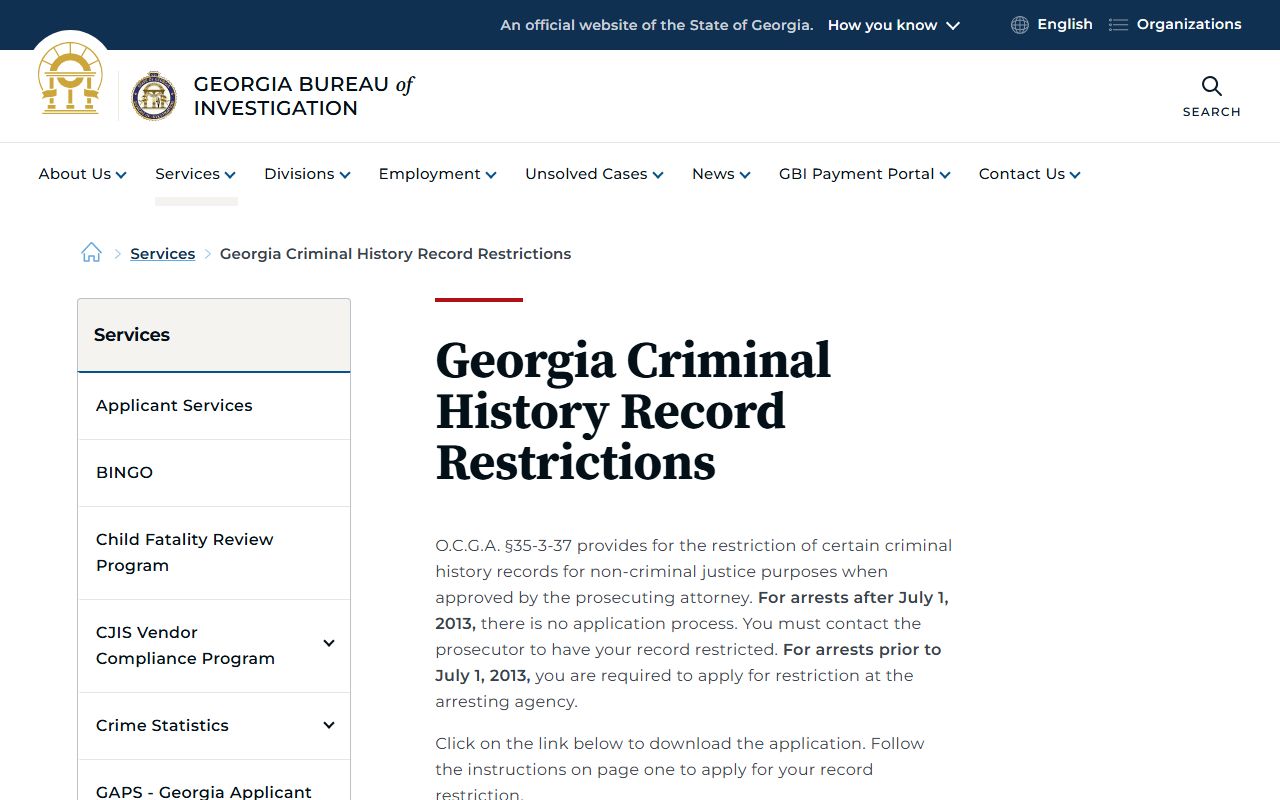
That state process affects criminal-history access, while certified Wilkes court documents still come from the court custodian.
O.C.G.A. 35-3-37 is the statute tied to Georgia criminal-history record review, correction, restriction, and sealing.
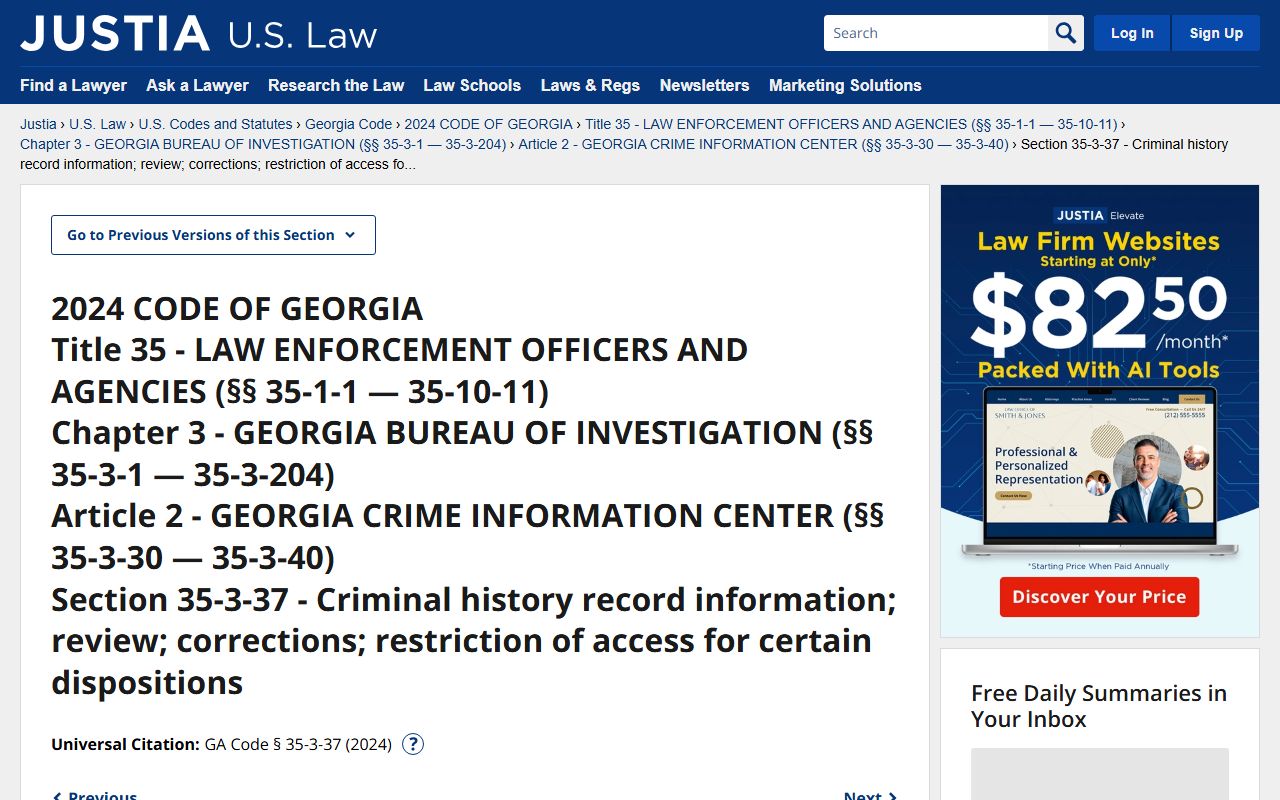
Use the statute with the GBI guidance because court records, criminal-history records, and arrest records are related but not identical files.
Wilkes Criminal Record Limits
Juvenile criminal-related records are restricted by Georgia juvenile confidentiality law and should not be treated as normal public docket records. Active investigations, sealed warrants, protected victim details, medical information, financial identifiers, and protected addresses may be withheld or redacted. Temporary protective order records may also carry safety limits. The court may release only the public parts of a file even when the case itself is listed.
The Toombs Circuit Public Defender page identifies the official indigent-defense office serving Wilkes County criminal defendants.
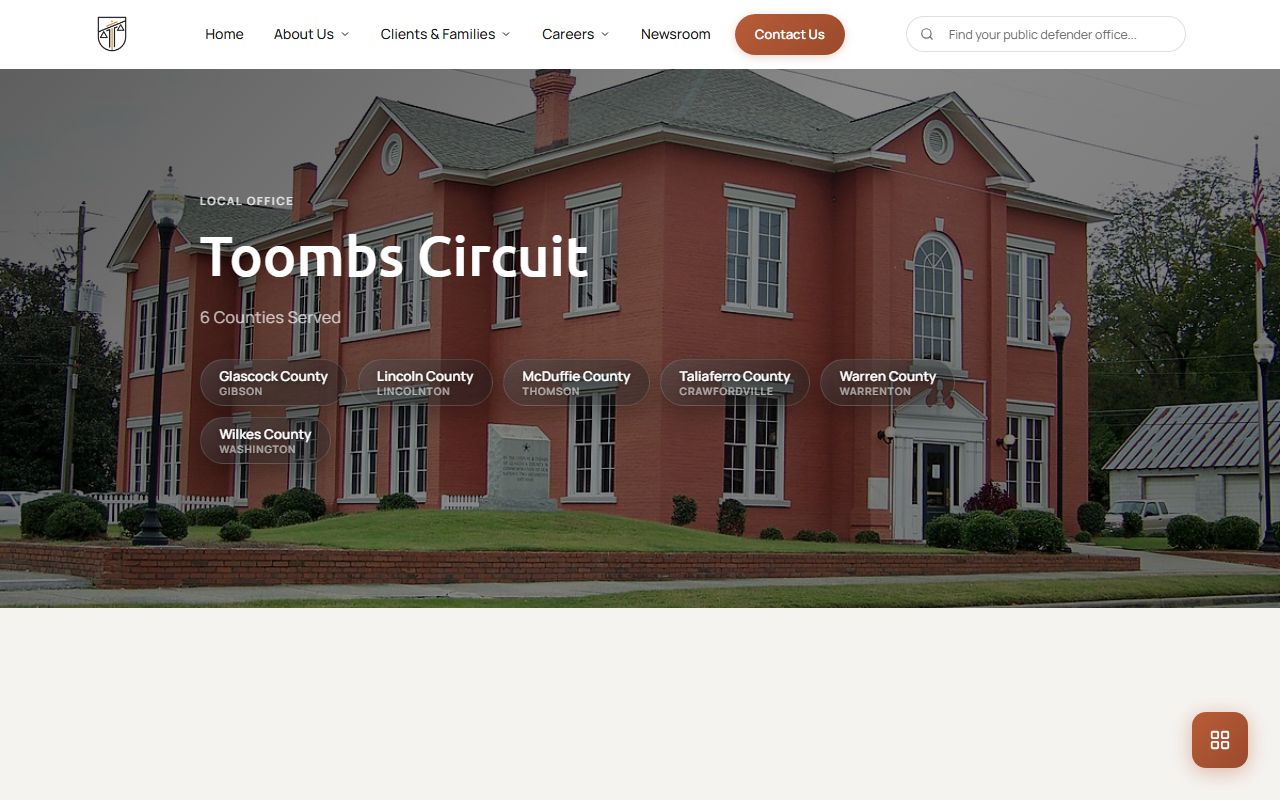
The public defender is a defense resource for qualifying defendants, not a public records desk.
Important: Criminal court records cannot be used for FCRA-regulated screening unless the user follows all applicable screening laws.